
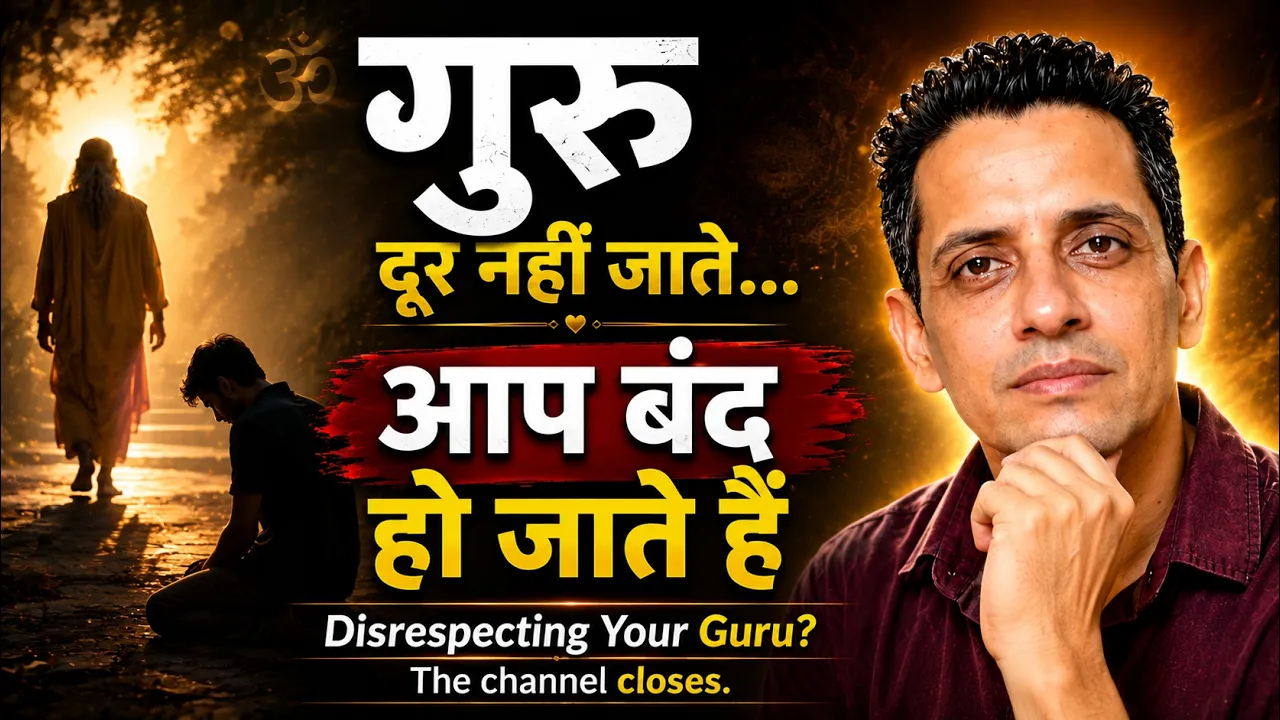
Disrespecting Your Spiritual Teacher
Have you ever reacted emotionally to someone who was genuinely trying to help you?
Perhaps they pointed out a mistake.
They challenged your thinking.
Or they encouraged you to change a habit that was holding you back.
In the heat of the moment, you may have responded with anger, frustration, or harsh words.
Later, after your emotions settled, you wondered:
“Did I just close myself off from an opportunity to grow?”
This question becomes even more significant when the person involved is a spiritual teacher or mentor. Lets understand how Disrespecting Your Spiritual Teacher affects you.
What Is the Role of a Spiritual Teacher?
Many people imagine that a spiritual teacher exists to comfort, praise, or validate them.
In reality, a genuine spiritual teacher often serves a very different purpose.
Their role is to:
- guide your growth
- help you see your blind spots
- encourage self-awareness
- support inner transformation
Rather than controlling your life, they offer direction that may help you become more conscious and aware.
Growth often begins when someone helps us see what we cannot yet see ourselves.
Spiritual Learning Is More Than Information
Learning spiritual concepts is different from collecting information.
You can read countless books, attend many workshops, and listen to inspiring talks.
Yet genuine transformation depends on something deeper:
your willingness to receive and apply what you learn.
Two students may attend the same class.
They hear the same words.
Yet one person’s life changes dramatically while the other’s remains almost the same.
The difference is often not the teaching.
It is their openness to learning.
Why Ego Often Reacts to Correction
Nobody enjoys being corrected.
When someone points out a mistake, the ego may immediately react with thoughts like:
- “They don’t understand me.”
- “Why are they criticizing me?”
- “They’re being unfair.”
- “They should appreciate me instead.”
These reactions are natural.
But they also provide valuable opportunities for self-reflection.
Sometimes the strongest emotional reactions reveal areas within ourselves that are asking for healing rather than defending.
Why Disrespecting Your Spiritual Teacher Can Limit Your Growth
Disrespecting your spiritual teacher does not necessarily harm the teacher.
Instead, it may reduce your own openness to learning.
Imagine trying to learn from someone while simultaneously rejecting everything they say.
Even if their guidance remains available, your mind has already decided not to receive it.
In this sense, the greatest loss is often not external.
It is the closing of your own receptivity.
Guidance Can Feel Uncomfortable
Many people expect encouragement from a teacher.
But genuine guidance sometimes feels uncomfortable because it challenges familiar habits.
A good teacher may:
- question your assumptions
- interrupt unhealthy patterns
- point out blind spots
- encourage greater responsibility
Although this may temporarily hurt the ego, it can also create opportunities for meaningful growth.
Sometimes correction is an expression of care rather than criticism.
Every Trigger Is an Opportunity to Learn
Whenever someone deeply triggers you, it may help to pause before reacting.
Instead of immediately asking:
“Why did they say that?”
you might also ask:
“Why did this affect me so strongly?”
This simple shift can transform emotional reactions into opportunities for self-understanding.
Our strongest reactions often reveal unresolved fears, insecurities, or emotional wounds that deserve attention.
The Difference Between Reacting and Reflecting
When emotions become intense, reacting is usually the easiest option.
Reflection requires more awareness.
Before responding, consider asking yourself:
- Am I responding from clarity or from hurt?
- Do I fully understand what was meant?
- Could there be another perspective?
- What can I learn from this experience?
Even if you eventually disagree, reflection usually leads to wiser decisions than impulsive reactions.
Respect Does Not Mean Blind Obedience
An important distinction must be made.
Respecting a spiritual teacher does not mean:
- accepting harmful behavior
- ignoring abuse
- giving up independent thinking
- following someone blindly
Healthy spirituality always allows room for discernment.
If you genuinely believe a teacher or mentor is not right for you, choosing a different path is completely valid.
The key difference lies in how you choose to leave.
Leaving respectfully preserves dignity for everyone involved.
Why Respectful Endings Matter
Sometimes people naturally outgrow one teacher and continue learning elsewhere.
That is part of many spiritual journeys.
If this happens, it is often healthier to:
- express gratitude
- leave peacefully
- avoid unnecessary conflict
- move forward respectfully
Ending a relationship with respect keeps your heart open to future learning.
Ending it through anger or resentment may leave emotional burdens that take much longer to heal.
Openness Is More Valuable Than Being Right
Many seekers become so committed to proving themselves right that they unintentionally stop learning.
Growth often begins when we are willing to admit:
- “Perhaps I don’t see the whole picture.”
- “Maybe there is something I can learn here.”
- “I may need more understanding.”
Humility does not weaken us.
It expands our capacity to grow.
Every Seeker Faces This Choice
At different points in life, every sincere seeker encounters a choice.
Do you protect your ego?
Or do you protect your opportunity to learn?
Choosing growth does not mean agreeing with everything.
It means remaining open enough to continue learning, even when feedback feels uncomfortable.
That openness is one of the greatest strengths on any spiritual path.
How to Respond When You Feel Triggered
If you feel emotionally hurt by a teacher, mentor, or guide, consider giving yourself time before responding.
You might:
- pause before sending a message
- reflect on your emotional state
- seek clarification calmly
- ask respectful questions
- revisit the situation after your emotions settle
Many misunderstandings become much clearer once emotional intensity decreases.
Responding from clarity usually leads to better outcomes than reacting in the heat of the moment.
Final Reflection
Disrespecting your spiritual teacher is not simply about saying harsh words.
More often, it begins when we close ourselves to learning.
The greatest question may not be:
“Was the teacher right?”
Instead, ask:
“Am I still open to learning?”
Because teachers may come and go throughout life.
But your openness, humility, and willingness to grow will continue shaping your spiritual journey wherever it leads 🌿
FAQs
What happens when you disrespect your spiritual teacher?
From a spiritual perspective, the greatest impact is often on your own openness and willingness to receive guidance, rather than on the teacher.
Does respecting a spiritual teacher mean blind obedience?
No. Respect does not require accepting harmful behavior or abandoning critical thinking. Healthy spirituality includes discernment and personal responsibility.
Why do spiritual teachers sometimes challenge their students?
Constructive challenges can help students recognize blind spots, develop self-awareness, and move beyond limiting patterns.
What should I do if I disagree with my spiritual teacher?
Seek clarification respectfully. If you eventually choose a different path, leaving with gratitude and respect often supports healthier personal growth.
How can I become more receptive to spiritual learning?
Practice humility, remain open to feedback, reflect before reacting, and approach learning with curiosity rather than defensiveness.


Jnana Param is a Spiritual Teacher, Twin Flames Coach and Kundalini Yoga practitioner. About Jnana Param