
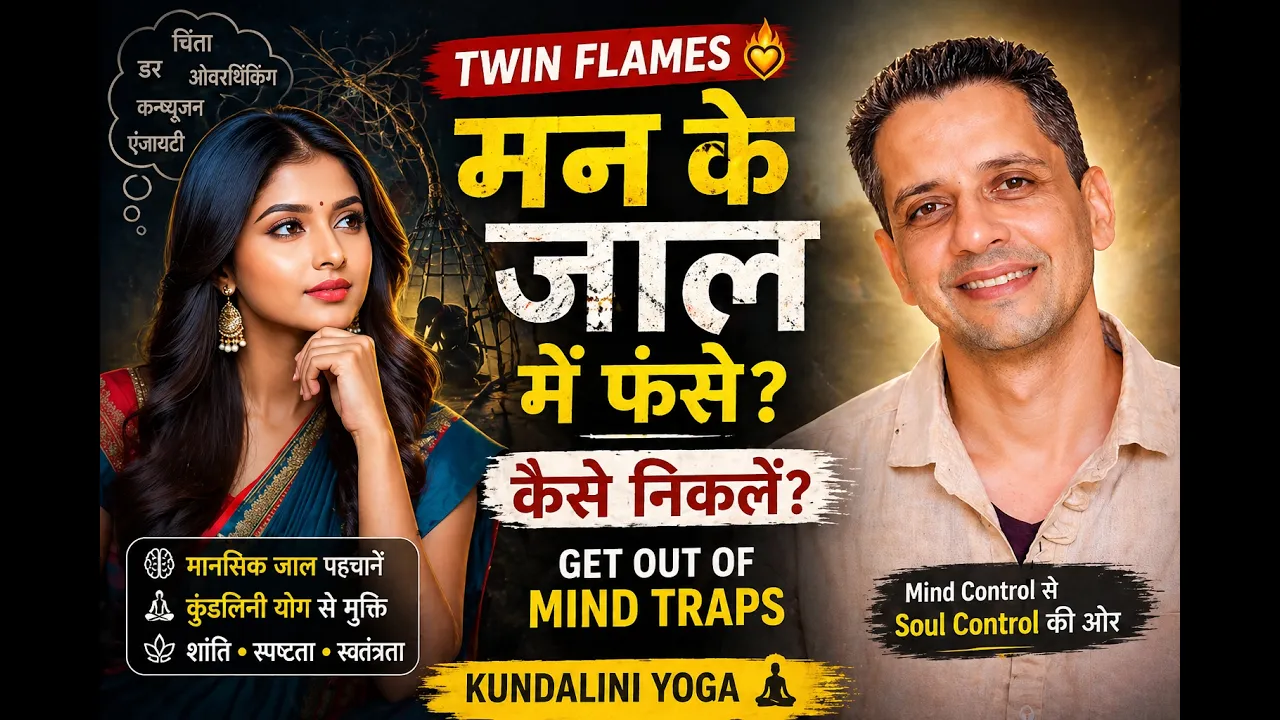
How to Get Out of Mind Traps
Have you ever noticed that the mind always seems to create something new to worry about?
Even when one problem gets solved, another issue suddenly appears.
One person is earning well but struggling with anxiety.
Another is working two jobs but still feels restless.
Someone else has financial stability, yet they keep getting involved in other people’s problems and emotional drama.
Different situations… but often the same hidden pattern.
The mind constantly keeps us occupied so that we never truly pause, relax, or become aware of what is happening within us.
What Are Mind Traps?
Mind traps are unconscious mental patterns that continuously pull our attention outward.
These traps can appear as:
- overthinking
- endless worrying
- emotional drama
- compulsive busyness
- constant problem-solving
- anxiety about the future
The mind keeps generating “important issues” so that we remain mentally engaged all the time.
And because this feels normal to most people, they rarely question it.
Why the Mind Never Wants to Stay Still
The mind has a natural tendency to avoid stillness.
Silence feels uncomfortable to it.
Peace feels unfamiliar.
So it keeps creating:
- new goals
- new fears
- new complications
- new emotional stories
Even after achieving financial success, many people still remain mentally disturbed because the real issue was never outside—it was the restless nature of the mind itself.
How Different People Get Trapped Differently
Some people become trapped in:
- work addiction
- financial pressure
- lifestyle expectations
Others become trapped in:
- relationship drama
- giving unnecessary advice
- interfering in other people’s lives
And some people remain stuck in endless decision-making loops:
- “Should I do this or not?”
- “What if this goes wrong?”
- “What is the perfect option?”
The outer situation changes, but the inner mechanism remains the same.
The Real Problem Is Not Outside
One of the deepest insights is this:
The core issue is not the external situation.
The core issue is the relationship between you and your mind.
How you perceive life depends heavily on:
- your mental conditioning
- emotional patterns
- inner awareness
Two people may face the same situation completely differently because their minds process reality differently.
How the Mind Shapes Your Experience of Life
Many human behaviors are connected to how the mind functions.
For example:
- Some people struggle to relax and enjoy simple beauty
- Some people struggle to make decisions confidently
- Some people constantly stay mentally occupied
All these patterns are connected to the conditioning and control of the mind.
When the mind dominates completely, life starts feeling heavy, restless, and complicated.
What Kundalini Yoga Actually Does
Kundalini Yoga works deeply on the mind itself.
Instead of only changing external situations, it gradually changes:
- mental patterns
- emotional reactions
- inner awareness
The grip of the restless mind slowly begins loosening.
And when this happens, a deeper intelligence beyond the mind starts awakening.
Awakening the Higher Consciousness
The discussion describes this higher intelligence using different names:
- soul
- higher consciousness
- divine power
- inner awareness
Normally, the mind dominates human life by default.
But through spiritual practices like Kundalini Yoga, another inner faculty begins activating—one that is calmer, wiser, and more conscious.
Instead of the mind controlling you, awareness slowly begins guiding the mind.
What Happens When the Mind Loses Its Grip
As awareness deepens:
- mental noise reduces
- emotional reactions soften
- compulsive busyness decreases
- inner clarity increases
Life may still contain responsibilities and challenges, but your relationship with them changes completely.
You stop feeling constantly chased by the mind.
The Difference Between Mind-Led Life and Conscious Living
When life is controlled only by the mind:
- there is constant pressure
- overthinking never stops
- peace feels temporary
- satisfaction never lasts
But when awareness becomes stronger:
- decisions become clearer
- life feels lighter
- inner peace increases
- even ordinary moments feel more enjoyable
This shift does not happen by suppression.
It happens through inner work and consciousness.
Why Awareness Is the First Step Out of Mind Traps
The most important beginning is simply recognizing:
“My mind is constantly running.”
Many people never even realize this.
They remain completely identified with every thought, fear, and emotional pattern.
But the moment awareness begins, a new possibility opens:
the possibility of living beyond unconscious mental patterns. 🌿
Kundalini Yoga and Inner Freedom
Kundalini Yoga is the path toward:
- greater inner ease
- mental balance
- emotional clarity
- conscious living
The purpose is not escaping life.
The purpose is learning how to live without being constantly controlled by the restless mind.
Final Reflection
If your mind constantly keeps you trapped in:
- worries
- overthinking
- endless problems
- emotional restlessness
then perhaps the real question is not:
“How do I solve every issue?”
But rather:
“How do I stop being controlled by the mind itself?”
Because true peace begins when awareness becomes stronger than the mental noise within 🌼
FAQs
What are mind traps?
Mind traps are repetitive mental patterns like overthinking, anxiety, emotional drama, and constant worrying that keep the mind restless.
Why does the mind constantly create problems?
The mind naturally avoids stillness and keeps generating issues, fears, and distractions to stay occupied.
How does Kundalini Yoga help the mind?
Kundalini Yoga gradually loosens the grip of the restless mind and increases higher awareness.
What is higher consciousness?
Higher consciousness refers to deeper inner awareness beyond compulsive thinking and emotional reactivity.
Can spiritual practices reduce overthinking?
Yes, practices focused on awareness and consciousness may help reduce mental restlessness and emotional overwhelm.


Jnana Param is a Spiritual Teacher, Twin Flames Coach and Kundalini Yoga practitioner. About Jnana Param