
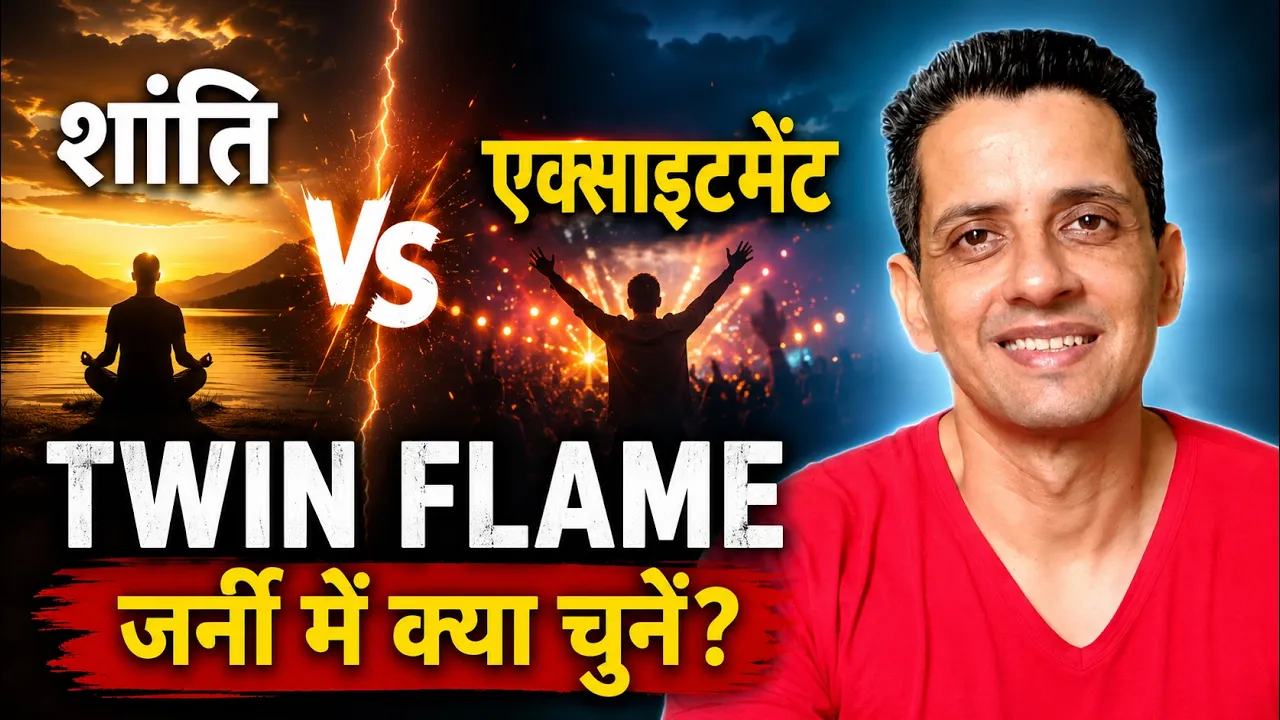
Peace vs Excitement
Have you ever felt torn between two very different experiences in life?
On one side, you want peace, calmness, stability, and inner balance.
On the other, you also want excitement, intensity, emotional closeness, romance, and physical intimacy.
This creates an interesting question:
In the journey of happiness, what matters more—peace or excitement?
And when it comes to a deep relationship such as a twin flame connection, the question can become even more confusing.
A powerful emotional experience may make you feel incredibly alive. But does that excitement actually enrich your life, or does it gradually disturb the inner peace you were seeking in the first place?
The answer may not be about choosing one and rejecting the other.
It may be about understanding the difference between peace vs excitement and learning how to experience both without becoming dependent on either.
Understanding the Difference Between Peace and Excitement
Peace and excitement are two very different internal experiences.
What Does Inner Peace Feel Like?
Peace is generally:
- stable
- grounded
- quiet
- relaxing
- emotionally steady
When you are grounded, you do not need to constantly think, analyze, or search for something to stimulate you.
There is a sense of being comfortable within yourself.
You can simply be present with your life without needing something dramatic to happen.
What Does Excitement Feel Like?
Excitement is different.
It is:
- stimulating
- intense
- emotionally energizing
- temporary
- unpredictable
Excitement can create a powerful emotional high.
For a while, you may feel more alive, more energetic, and more connected to life.
The difficulty begins when you start believing that this emotional high is the same thing as happiness.
Why We Naturally Seek Excitement
The human mind is naturally attracted to stimulation.
It enjoys:
- novelty
- new experiences
- emotional intensity
- changes in routine
When everyday life becomes repetitive, excitement breaks the monotony.
Something intense happens, and suddenly you feel different.
You may think:
“I feel alive again.”
This is why exciting experiences can be so attractive.
The challenge is that the mind can gradually become dependent on these emotional highs.
When Excitement Becomes Emotional Dependency
There is an important difference between enjoying excitement and needing excitement.
You can enjoy an exciting experience and then peacefully return to your normal state.
That is healthy balance.
But if you begin feeling low whenever the excitement disappears, a dependency may be developing.
You start needing another emotional high to feel normal again.
Eventually, ordinary life may begin feeling boring.
Peace may even start feeling like emptiness.
This is where the distinction between peace vs excitement becomes especially important.
Why Emotional Highs Can Be Misleading
An emotional high can feel like extraordinary happiness while you are experiencing it.
But what happens afterward?
This is where looking at the whole experience becomes important.
An intense experience may temporarily take you very high emotionally, followed by a significant drop once the stimulation disappears.
The important question is therefore not:
“How amazing did I feel during that moment?”
Instead ask:
“How did I feel afterward?”
Did the experience leave you:
- peaceful?
- grounded?
- emotionally stable?
Or did you become:
- restless?
- exhausted?
- emotionally low?
- dependent on repeating the experience?
The period after the excitement can reveal much more than the excitement itself.
Twin Flame Connections Can Intensify Emotional Highs
This becomes especially relevant in twin flame relationships.
Deep connections can involve very strong:
- attraction
- emotional intensity
- physical closeness
- romantic feelings
Because these experiences can feel unusually powerful, it is easy to interpret emotional intensity as proof that something is deeply meaningful.
You may think:
“This feels so intense. This must be extraordinary.”
Perhaps it is.
But intensity alone does not tell you whether an experience is creating long-term emotional stability.
A healthier question is:
Does this connection bring greater stability into my life, or does it repeatedly create emotional highs and lows?
Peace vs Excitement: Look at the Overall Experience
When evaluating any exciting relationship or experience, don’t judge it only by the peak moment.
Look at what happens before, during, and after.
For example:
Before: Are you restless and desperately waiting for the experience?
During: Do you feel intensely stimulated and emotionally high?
After: Do you feel peaceful and fulfilled, or empty and depleted?
This broader perspective can reveal whether the experience is enriching your life or creating a cycle of dependency.
Excitement Is Not the Enemy
It is important not to misunderstand the message.
Excitement is not inherently wrong.
Neither are:
- romance
- intimacy
- celebration
- social experiences
- enjoyable activities
The problem begins when excitement becomes necessary for you to feel okay.
A balanced life can contain both peace and excitement.
The goal is not to eliminate excitement.
The goal is to prevent excitement from controlling your emotional state.
When Intimacy Becomes Something You Need
The same principle can apply to physical intimacy.
There is nothing inherently wrong with wanting intimacy with your partner.
But ask yourself:
“Can I remain peaceful and fulfilled even when intimacy is not available?”
If yes, the experience may simply be something you enjoy.
If you become restless, dissatisfied, or emotionally low without it, there may be some degree of dependency developing.
The distinction is subtle but important:
Enjoyment adds something to your life.
Dependency makes you feel that life is incomplete without it.
Grounding: The Key to Healthy Excitement
Grounding does not mean becoming emotionless or living a boring life.
It means being able to enjoy an experience without losing your inner stability.
You can experience:
- romance
- intimacy
- adventure
- celebration
- excitement
and still return to a peaceful internal state afterward.
That is a much healthier relationship with excitement.
How Much Excitement Is Right for You?
Everyone has a different capacity.
What feels enjoyable and refreshing for one person may leave another person exhausted.
This applies to:
- social events
- late nights
- intense exercise
- entertainment
- emotional experiences
- physical intimacy
Your goal is to discover your own capacity.
The useful question is:
“How much excitement can I experience while still feeling good afterward?”
That is a much more conscious way of living.
The Sweetness of Balance
Think about eating a normal meal.
You may enjoy the meal completely.
If you receive a dessert afterward, that can be enjoyable too.
But if you become dependent on dessert to enjoy the meal, something has changed.
The dessert is no longer an addition.
It has become a requirement.
Excitement can work in exactly the same way.
It is beautiful when it adds to a fulfilling life.
It becomes problematic when you cannot enjoy your life without it.
How to Know Whether You Need More Peace
You can begin observing yourself through a few simple questions:
- Can I feel peaceful without this experience?
- Do I become restless when it is absent?
- Does this relationship ground me or create dependency?
- How do I feel several hours later?
- How do I feel the next day?
- Am I enjoying this experience, or do I need it to feel alive?
These questions can bring tremendous clarity.
You do not need to judge yourself.
Simply observe.
Awareness itself begins changing the relationship you have with excitement.
Peace Does Not Mean a Boring Life
One common misunderstanding about peace is that it must mean a dull or uneventful life.
It doesn’t.
Peace can be deeply fulfilling.
It can feel:
- nourishing
- complete
- stable
- deeply satisfying
You don’t constantly need something dramatic to happen.
You can enjoy a quiet day and still feel fully alive.
That is very different from emotional numbness or boredom.
Lasting Happiness Comes From Inner Stability
Excitement can create temporary peaks.
Peace provides a more stable foundation.
When you are internally fulfilled, exciting experiences can become beautiful additions to your life.
You can enjoy intimacy when it happens.
You can enjoy a celebration when it happens.
You can enjoy a romantic experience when it happens.
And when none of these things are happening, you can still be okay.
That is freedom.
Choosing Awareness Over Extremes
The real question in peace vs excitement is therefore not:
“Which one should I choose?”
It is:
“Can I experience excitement without losing my peace?”
This is where awareness becomes important.
With greater awareness, you begin recognizing:
- what energizes you
- what exhausts you
- what genuinely fulfills you
- what creates dependency
Sometimes you will overdo something.
That is part of learning.
You may stay up too late, become too emotionally involved, exercise too intensely, or spend too much time seeking stimulation.
The experience itself can teach you where your limits are.
Final Reflection
You don’t have to choose between a peaceful life and an exciting life.
You can experience both.
The deeper goal is to reach a state where excitement adds to your happiness without becoming the source of your happiness.
When inner peace is already present, romance can be enjoyed more freely.
Intimacy can be enjoyed more consciously.
Adventure can be enjoyed without desperation.
And excitement can come and go without taking your emotional stability with it.
Perhaps lasting happiness is not found in choosing peace vs excitement.
Perhaps it is found in developing enough inner stability that you can enjoy excitement without losing your peace. 🌿

FAQs
What is the difference between peace and excitement?
Peace is generally stable, grounded, and calming, while excitement is stimulating, intense, and temporary. Both can be enjoyable, but they affect your emotional state differently.
Is excitement bad for emotional well-being?
No. Excitement can enrich life when experienced consciously. The concern begins when you become dependent on emotional highs to feel happy or alive.
Can a twin flame relationship create emotional dependency?
A highly intense relationship can create strong emotional attachment. The important thing is to observe whether the connection supports stability or creates repeated emotional highs and lows.
How do I know if I am dependent on excitement?
Ask yourself whether you can remain peaceful without the exciting experience. If its absence consistently creates restlessness, emptiness, or emotional lows, dependency may be developing.
Does inner peace mean giving up romance and intimacy?
No. Inner peace does not require avoiding romance or intimacy. It means being able to enjoy these experiences without needing them to maintain your emotional stability.
How can I balance peace and excitement?
Enjoy exciting experiences consciously while observing their effects afterward. Choose an amount of stimulation that allows you to remain grounded, rested, and emotionally stable.

Jnana Param is a Spiritual Teacher, Twin Flames Coach and Kundalini Yoga practitioner. About Jnana Param